Palm Jumeirah Investment Analysis 2026: What DLD Data Shows About Prices, Yields, and Which Properties Are Worth It
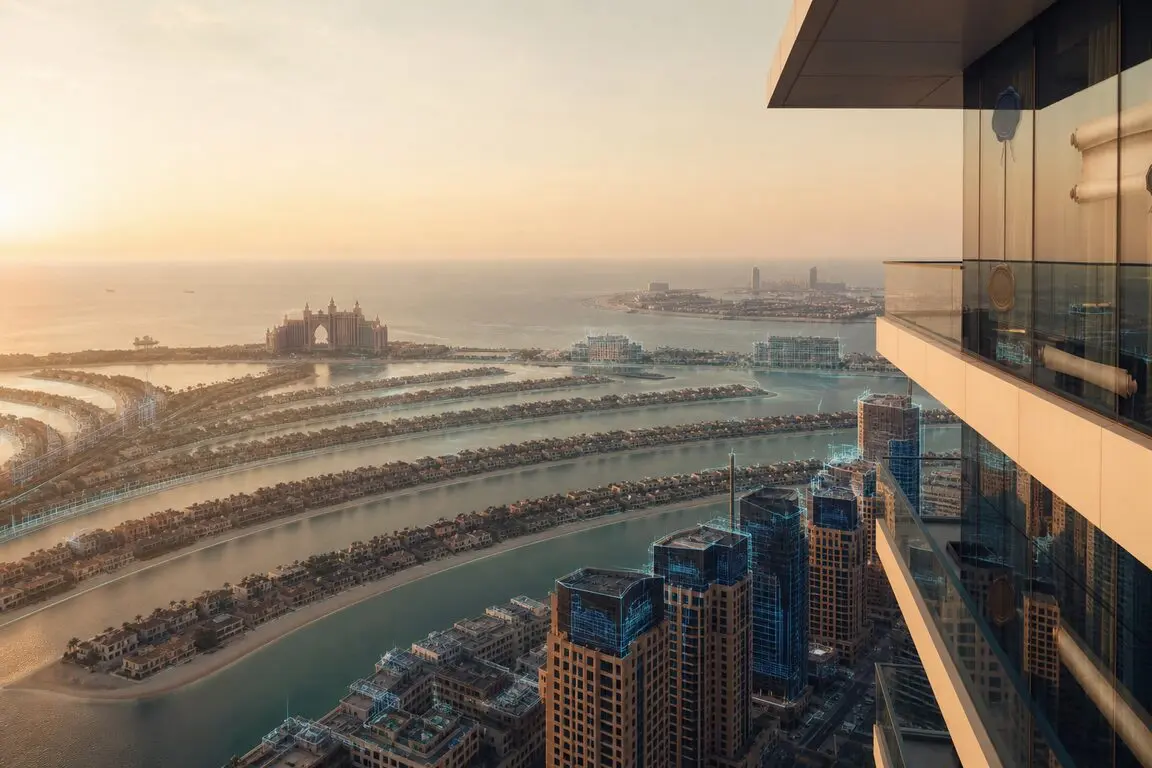
Community analysis (DLD)
Updated 22 Oct 2026 · first report free, then USD 1 per check or 5 for USD 5. DLD/Ejari totals and medians move every month — verify numbers in Dubai REST / Pulse before wiring money.
4–6%
Gross yield
Ultra-premium
AED 3M+
Ticket
Typical entry
Selective
Liquidity
Frond / building
Content reviewed: June 16, 2026.
June 2026 Gulf read: US–Iran framework ceasefire (15 Jun) + Hormuz reopening plan — de-escalation channel, not a guaranteed reset; marine war-risk premiums and travel sentiment may lag. Q1 2026: 44,493 residential deals (Dh139.2B, +4% YoY volume, −17% QoQ); secondary resales −19% YoY while off-plan stayed ~68–73% of volume. ~60% prefer ready vs ~23% off-plan (Savills, May 2026). Apartment enquiries −31% YoY vs villa/townhouse +15% (Betterhomes). Prime new-let rents −10% to −20% YoY in prime communities (Savills). April rebounded (13,977 sales, Dh48B) — measured, not pre-shock pace. Underwrite net yield and resale liquidity on your tower’s last-90-day DLD closes.
Understanding Palm Jumeirah as an investment in 2026 means understanding precisely what you are buying: a supply-constrained, globally recognised prestige asset with moderate net yields, significant service charge variance, and a bifurcation between modern and legacy stock that DLD transaction data is beginning to reflect in price performance.
What the DLD Transaction Record Shows
Palm Jumeirah generates consistent DLD transaction volume across its diverse property types — apartments in Shoreline and Golden Mile, frond villas, trunk towers, and branded residences. The secondary market is active and international, with a buyer pool that includes UHNW individuals, family offices, and international investors for whom the Palm address is itself the investment thesis.
Price per sqft. DLD transaction prices on Palm Jumeirah average approximately AED 3,800 per sqft across the community — among the highest in Dubai. The range is wide: mid-market Shoreline apartments transact at AED 2,200–2,800 per sqft; frond villas at AED 3,500–5,500 per sqft depending on size, position, and renovation status; branded residences (W Residences, FIVE Palm, Serenia, Muraba) at AED 4,000–7,000+ per sqft.
Price trend. After the exceptional 2021–2024 appreciation cycle, DLD transaction price growth on Palm moderated to 4–8% year-on-year through early 2025 — meaningful but well below the double-digit gains of the preceding cycle. From Q1 2026: secondary apartment enquiries citywide fell sharply while villas/townhouses held up better; prime new-let rents declined 10–20% YoY in several prime communities (Savills, May 2026). Palm frond villas and trophy stock showed relative resilience in broker reporting; short-stay and tourism-linked apartment stock faces more rent and vacancy pressure when travel sentiment dips. Treat Ejari on your exact building as mandatory — community averages lag shocks.
Vacancy. Ejari data through early 2025 showed Palm vacancy around 2–3% on established stock — among the tighter bands in Dubai. Post-escalation: do not assume that print still holds for holiday-home or furnished short-let units; long-let family tenancy on frond villas has behaved differently from Marina-style corporate/short-stay towers. Average letting time remains 15–30 days on well-priced long-let stock in normal conditions — verify live before you buy for income.
The Service Charge Reality: AED 9 to AED 38 Per Sqft
Palm Jumeirah's service charge spectrum is the most extreme of any Dubai community — a 4x range between the lowest and highest charges on the same island. Understanding where a specific property sits in this spectrum is as important as understanding its DLD transaction price.
Villas (low-density): Balqis Residence beachfront villas: AED 9/sqft. Individual infrastructure, private pools and gardens, no shared vertical systems. The lowest operational burden on Palm.
Legacy apartments (mid-market): Shoreline Apartments: AED 10–12/sqft. Moderate fees for established mid-market stock with straightforward building management.
Premium branded residences (high-density vertical):
- Serenia The Palm: AED 26.73/sqft
- Muraba Residences: AED 27.07/sqft
- FIVE Palm Jumeirah: AED 30.72/sqft
- W Residences: AED 38.19/sqft
The branded residence service charges are not inflated management fees. They reflect the actual cost of hotel-grade services — housekeeping, concierge, room service availability, premium amenities (multiple pools, spas, beach clubs, F&B outlets), centralised district cooling, and brand licensing. Buyers of W Residences are not buying an apartment with hotel branding. They are buying a hotel unit in a residential wrapper, with all the operational costs that entails.
Net Yield Reality: The Numbers Across Property Types
W Residences 2-bedroom (1,200 sqft):
- Purchase price: AED 6,000,000
- Annual Ejari rent: AED 300,000
- Gross yield: 5.0%
- Service charges (AED 38.19/sqft): −AED 45,828
- Municipality fee (5%): −AED 15,000
- Chiller + maintenance: −AED 11,000
- Net yield: approximately 3.8%
Balqis beachfront villa (4,000 sqft):
- Purchase price: AED 18,000,000
- Annual Ejari rent: AED 600,000
- Gross yield: 3.3%
- Service charges (AED 9/sqft): −AED 36,000
- Municipality fee (5%): −AED 30,000
- Utilities + maintenance: −AED 25,000
- Net yield: approximately 2.8%
Dubai Hills Estate villa (4,000 sqft — for comparison):
- Purchase price: AED 8,500,000
- Annual Ejari rent: AED 420,000
- Gross yield: 4.9%
- Service charges (AED 2.5/sqft): −AED 10,000
- Municipality fee (5%): −AED 21,000
- Utilities + maintenance: −AED 20,000
- Net yield: approximately 4.3%
The pattern is consistent: Palm Jumeirah properties produce 2.8–4% net yield at 2–3x the entry price of comparable Dubai alternatives. An investor evaluating Palm on yield metrics will always find better alternatives. That is not the correct framework for Palm — the correct framework is capital preservation, prestige positioning, and vacancy protection, not income maximisation.
Supply Constraint: The Price Floor Argument
Palm Jumeirah is land-locked. Every developable parcel has been built. No material new supply is entering the community. The supply constraint creates a genuine price floor that most Dubai communities lack — there is no Oqood pipeline compressing yields or creating resale competition from new developer launches.
This constraint is real but incomplete as an investment argument. The existing stock is aging without replacement — and within Palm, quality bifurcation is emerging in DLD transaction data. Modern post-2015 branded residences and renovated frond villas are outperforming mid-2000s Shoreline and Golden Mile apartments in price growth. The supply squeeze protects average prices. It does not protect all assets equally.
Mid-2000s Palm apartment stock faces the same Al Sa'fat energy compliance pressure as legacy Marina and Business Bay towers. Buildings without retrofit plans approaching the 2030 deadline face restricted liquidity as buyers increasingly prefer compliant stock, and as tenants shift toward energy-efficient buildings with lower DEWA costs. Palm's higher capital values make retrofit costs more justifiable as a percentage of asset value — a AED 200K retrofit on a AED 5M apartment is 4% of value, manageable — but retrofit execution still requires owner consensus in fragmented buildings, which is organisationally complex in communities with high foreign ownership and absentee landlords.
Apartments vs Villas vs Branded Residences: Which Segment
Apartments (Shoreline, Golden Mile, Tiara): Mid-market entry to Palm at AED 2,200–2,800/sqft. Service charges AED 10–14/sqft — the most yield-efficient Palm segment. Gross yields 4.5–6%, net yields approximately 3.5–4.5%. Best suited to investors who want Palm positioning at lower capital commitment and are comfortable with legacy stock compliance risk.
Frond villas: AED 3,500–5,500/sqft. Low service charges (AED 9–12/sqft), private infrastructure, no shared vertical systems. The most operationally simple Palm product. Gross yields 3–4%, net yields 2.5–3.5%. Suited to UHNW wealth preservation capital with 10+ year hold periods.
Branded residences (W, FIVE, Serenia, Muraba): AED 4,000–7,000+/sqft. Service charges AED 26–38/sqft. Net yields 3.5–4.5% despite higher gross rents because service charge drag is severe. Suited to non-resident owners using hotel rental programmes for hands-off management, or buyers for whom the lifestyle product is the primary objective.
Palm Audit: Prestige vs Liquidity
Community-level Palm data — total transaction volume, average price per sqft by property type, Ejari density, and which projects show the strongest transaction signatures — lives in Dubai Pulse and Dubai REST when you filter the Palm master community and export the slices you need.
What to use before you commit Palm capital
High capital entry requires deep DLD verification:
- Dubai REST / Dubai Pulse: Compare frond villa and tower closing tapes with what you are being asked to pay.
- Ejari + RERA service charge index: Model net yield after AED 26–38/sqft branded-residence fees — the drag is real. For any specific building — Shoreline Block, a frond villa cluster, or a branded residence tower — when you have a quoted package, run /check on this website first, then buy the paid report (USD 1, or 5 checks USD 5 on Gumroad) if you need the PDF booklet, comparable sales, risks, and negotiation points.
Before you wire
We would not wire a deposit on portal copy alone. Pull 12-month DLD registered closes for your project and size band in Dubai REST or Dubai Pulse, then run /check on this website when you have the quoted package. Buy the paid report (USD 1, or 5 checks USD 5 on Gumroad) when you need exact comps, broker questions, and counter-offer wording for Form F or SPA review.
FAQ
What are current property prices on Palm Jumeirah in 2026? DLD transaction prices average approximately AED 3,800/sqft across the community. Shoreline and Golden Mile apartments: AED 2,200–2,800/sqft. Frond villas: AED 3,500–5,500/sqft. Branded residences (W, FIVE, Serenia, Muraba): AED 4,000–7,000+/sqft. In absolute terms: 1-bed apartments AED 2.5M–5M; 3-bed villas AED 12M–25M+; branded residence 2-beds AED 5M–10M.
What rental yields does Palm Jumeirah produce? Gross yields: apartments 4.5–6%, branded residences 4.5–5.5%, villas 3–4%. Net yields after service charges and costs: apartments 3.5–4.5%, branded residences 3.5–4.5%, villas 2.5–3.5%. Palm is not a yield play — investors targeting 6%+ net should look at JVC, JLT, or Dubai South instead.
Why are Palm Jumeirah service charges so high in branded residences? Branded residence service charges (AED 26–38/sqft) reflect hotel-grade operational costs — housekeeping availability, concierge, premium F&B, multiple pools and spas, centralised district cooling, and brand licensing fees. These are not management inefficiencies. They are the cost of buying a lifestyle management system rather than a residential apartment. Shoreline and villa service charges (AED 9–14/sqft) are materially lower because they involve simpler infrastructure without hotel-grade amenity operation.
Is Palm Jumeirah still a good investment in 2026? The 116% appreciation phase of 2019–2024 is over. Palm is now a wealth preservation and capital stability play — not a yield maximisation or speculative appreciation play. It suits UHNW investors, family offices, and buyers for whom prestige positioning and vacancy protection (2–3%) matter more than yield. It does not suit cash flow investors, short-term speculators, or passive investors unable to execute building-level due diligence on service charge and compliance status.
How does Palm Jumeirah compare to Dubai Hills Estate for villa investment? Dubai Hills villas produce approximately 4–4.5% net yield at AED 8–12M entry versus Palm villas at 2.5–3.5% net at AED 12M–25M+. Dubai Hills has a larger supply pipeline but also a growing family community with schools, retail, and golf course amenity. Palm has stronger brand recognition, tighter vacancy, and full supply constraint. For yield: Dubai Hills. For prestige, international brand recognition, and supply protection: Palm.
Explore this community
View DLD transaction data, yields, and project rankings for this location.
View palm jumeirah community report →